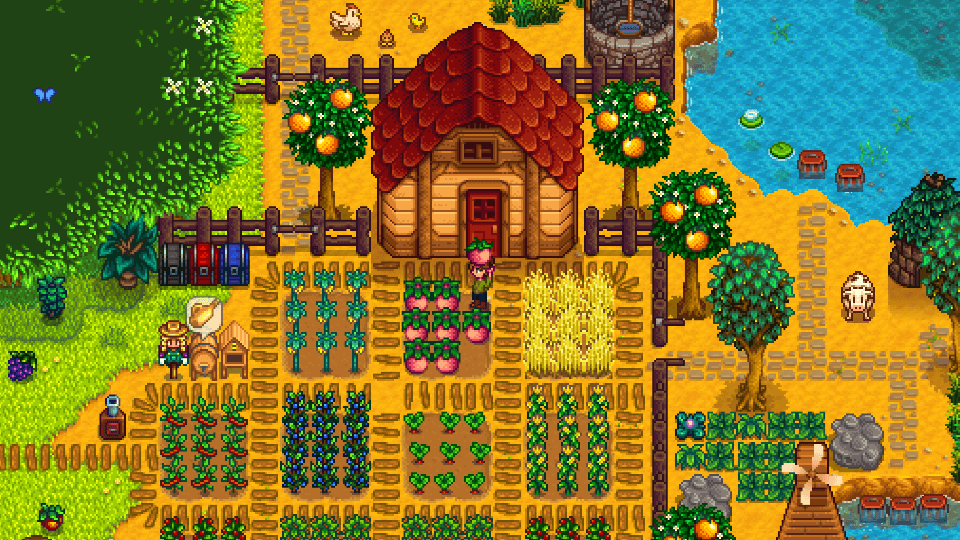
Masculinity and femininity are often associated with gender and physical sex (often confused with the concept of gender) but are more accurately considered the idealized traits of performing or embodying certain gender identities. This comes into focus when we see people playing with the ideas and expectations of gender performance and the clarity of seeing … Continue reading Feminine and Masculine Game Mechanics
Category: Gaming Elements
Dark Souls and “Git Gud” Culture
Get good or, as it then soon became, "git gud" is a mentality that if a game is too hard to play, one should simply "get good" at it. It arose in popularity as Dark Souls hit the scene and players that were struggling with Dark Soul's style/type of combat mechanics were told to get … Continue reading Dark Souls and “Git Gud” Culture
Armor: Practicality v. Aesthetic
In most games, but especially my latest obsession of Assassin's Creed: Odyssey, I'm constantly at odds with the aesthetic of armor. But when a game gives me the option to play dress up with the main character, you best believe me when I say I'm not running around in ugly armor. I will play an objectively "harder" … Continue reading Armor: Practicality v. Aesthetic
Pathfinder 2E Playtest review
This last weekend, me and some friends finished the playtest for the new edition of Pathfinder. Overall, I enjoyed the new edition's simplification of the original Pathfinder, a derivative of D&D 5E. The feat-heavy system initially felt hard to navigate, especially since I was using a large PDF to navigate the character building system, where … Continue reading Pathfinder 2E Playtest review
The Evolution of Open World Games
The introduction of The Elder Scrolls: Skyrim put "open world" on everyone's tongues. Suddenly, it became the next big thing to emulate in order to be successful. The Dragon Age series moved from semi-open mapped to their version of an open world in Dragon Age: Inquisition with very large maps that could be accessed via fast travel. But … Continue reading The Evolution of Open World Games
Games Don’t Emulate Film or Books: A Response to Ian Bogost
Ian Bogost recently had a piece published on the Atlantic titled Video Games Are Better Without Story. There, he argues that games can only attempt to perform a compelling narrative but it will never be as strong as it's media predecessors, such as written literature (books without additional media supplements) and film. The argument he attempts to persuade … Continue reading Games Don’t Emulate Film or Books: A Response to Ian Bogost
Emulating Dungeons and Dragons
If you haven't played Dungeons and Dragons before, I highly recommend it, especially if you're a fan of games like Divinity: Original Sin, Dragon Age, or A Bard's Tale. These games are almost digital recreations of the tabletop game Dungeons and Dragons by Wizards of the Coast, with some clear deviations due to the format in which you're playing. These … Continue reading Emulating Dungeons and Dragons
Why did Fallout 4 Disappoint?
The mechanics were better, the graphics looked great, and the character customization was very responsive and creative! So why did it leave me with a bad taste in my mouth? I pre-ordered the game and bought the season pass for the DLC, spending way too much money on a game I'd end up hardly enjoying. … Continue reading Why did Fallout 4 Disappoint?
Completionism
With speedplays on one side of gameplay styles, the other has completionist runs, in which the player attempts to do every little thing the game asks of them to do, and no other game prompts this style of play than the Pokemon series as it's built around the catchphrase "Gotta Catch 'Em All." I rest … Continue reading Completionism
The Operator
In games, we have different kinds of control over the story and/or assets and the related mechanics. The term operator simply means the player and what the player is able to control in the game. The diegetic actions of the operator is the literal manipulation of the game within the confines of the actual elements. … Continue reading The Operator